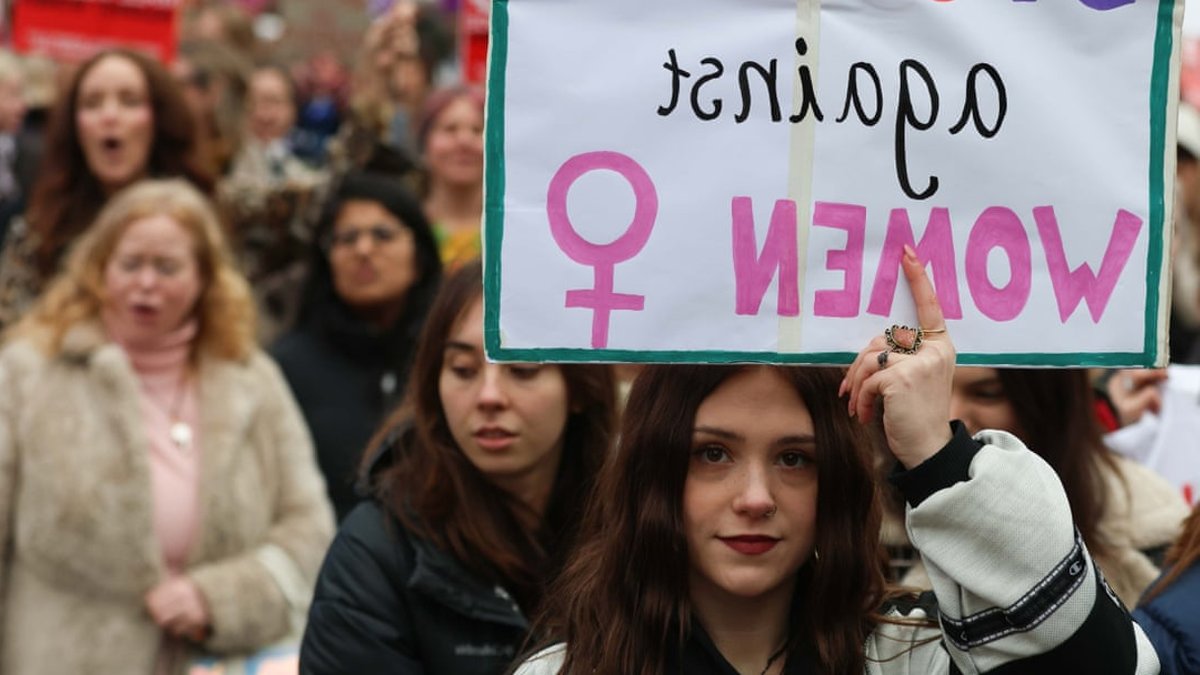
Early release schemes for prisoners in England and Wales are set to place hundreds of vulnerable women in danger. The government plans to release 5,000 offenders by October, a move that puts survivors of domestic abuse at immediate risk of death or serious injury. While rapists and some child sex offenders have been excluded from this scheme, men convicted of domestic violence have not. This exclusion sends a message that violence against women is not a priority.
Keir Starmer promised to cut violence against women by half within a decade. Critics argue this pledge is undermined by the plan to free thousands of criminals early to ease prison overcrowding. The decision not to exclude domestic abuse perpetrators has been described as “gambling with women’s lives.”
The domestic abuse commissioner, Dame Nicole Jacobs, stated that these individuals are “fixated on their victim and will stop at nothing to control and cause harm.”
The data on reoffending rates is limited because domestic abuse statistics are hidden among other offences. However, recent incidents of public disorder have shown that men who abuse partners have a wider propensity for violence. Many of those arrested during violent protests after the sentencing of Henry Nowak’s murderer had previously been reported to the police for domestic abuse. This suggests that men who abuse their families often exhibit a dangerous pattern of behavior that extends beyond the home.
Joan Smith, a former chair of the mayor of London’s Violence Against Women and Girls Board, argues that the current system is chaotic. She points out that the National Audit Office found nearly 9,000 people required to wear an electronic tag did not have one. Police and probation officers often lack the capacity to respond quickly to breaches of license conditions. Nearly half of these alerts result in no further action, which leaves victims facing sceptical questioning when they report that their abuser is near their home.
Women rarely commit violent crimes and are overwhelmingly victims rather than perpetrators. The criminal justice system has historically struggled to secure convictions in cases of sexual violence, securing fewer than 3,000 convictions in the 70,000-plus rape cases reported to the police in England and Wales each year. Survivors argue that the proposed early release for domestic abusers is another instance of the system failing them.
The original proposal to include sex offenders in the early release scheme was met with outrage because survivors felt their safety was being sacrificed for political expediency. Now, they are told that the prime minister would have liked to exempt more categories of offenders but is constrained by the prisons crisis. The result is that victims of domestic violence must accept that their attackers will be released after serving only a third of their sentences.
This decision creates a stark contrast with other legal struggles. While the justice system grapples with high-profile cases involving complex legal arguments, other corners of the law deal with more visceral human experiences. For instance, a former death row lawyer has found dark humor in the extreme nature of capital punishment.
Furthermore, the ongoing situation in regions like the West Bank highlights how settler violence continues to destabilize communities far removed from the immediate crisis in British prisons.


