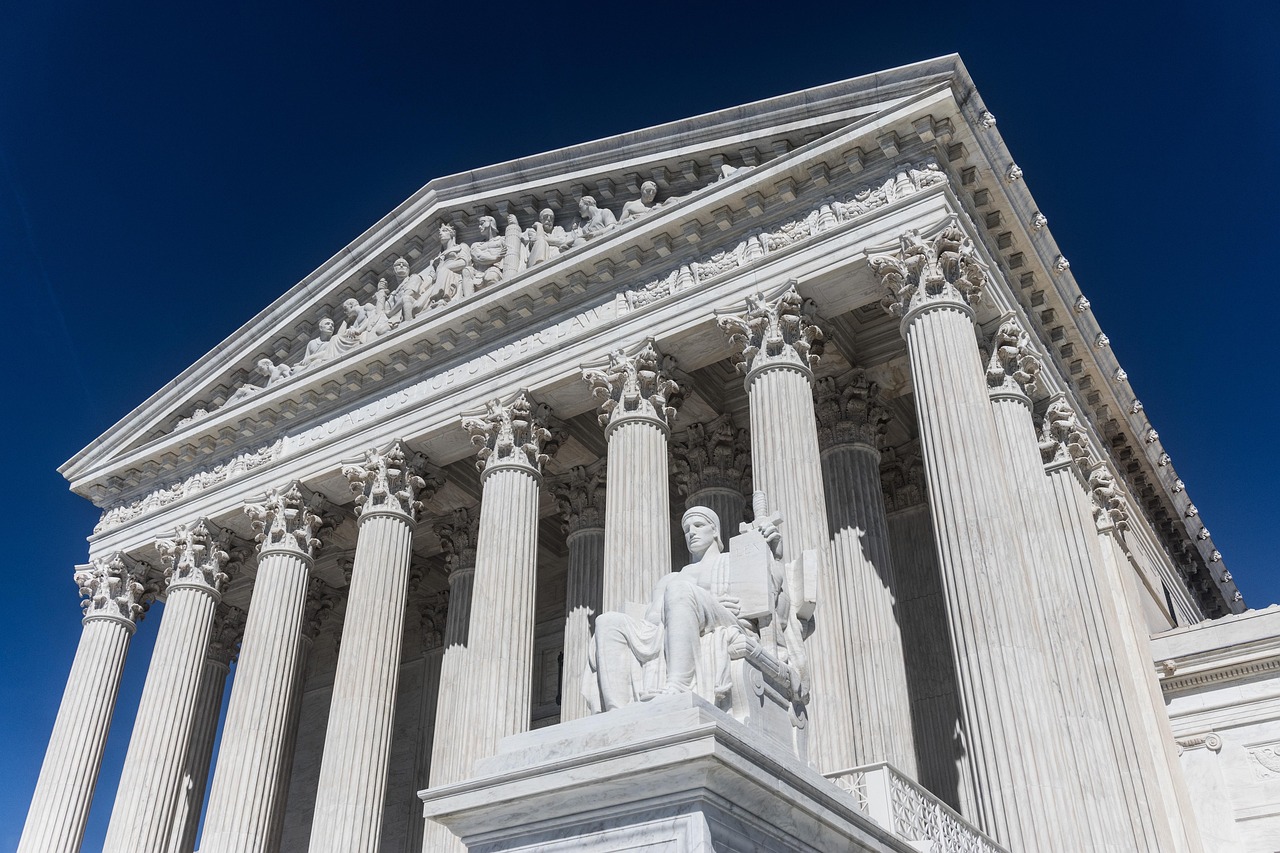
The U.S. Supreme Court handed down its opinion in Pung v. Isabella County on Wednesday, settling a key question left open by its 2023 ruling in Tyler v. Hennepin County: how to measure “just compensation” when the government takes property through a tax foreclosure sale. The Court held that the proper measure is the price the property actually fetches at auction, not what it might have sold for on the open market. “To sum up, just compensation in the tax-sale context need not be based on a property’s fair market value,” the opinion states.
The case drew intense attention from local governments, tax-lien investors, and property rights advocates. At issue was whether the Takings Clause of the Fifth Amendment requires local officials to pay a homeowner the difference between the tax debt and what the home would have sold for in a voluntary, private-market transaction — or merely the surplus proceeds left over after a lawfully conducted auction.
The Court settles the measure of compensation
Justice Thomas, writing for the majority, anchored the ruling in historical practice. The opinion traces tax sales back to the Magna Carta and notes that “a long legal tradition dating back to the Founding embodies” the principle that tax-collecting officials need only return the “overplus” — the difference between the auction price and the tax debt. Auction prices have long been treated as conclusive evidence of value, the Court said, not as a floor subject to later judicial revision.
The Court rejected the argument that the Constitution requires governments to guarantee market outcomes. “Pung’s fair-market-value theory would impose unprecedented burdens on jurisdictions that wish to collect unpaid taxes and might well make tax sales impractical,” the opinion reads. Adopting such a rule, the Court explained, would turn routine tax collection into appraisal-driven litigation, forcing courts to resolve valuation disputes years after foreclosure with stale evidence.
Related: Retailers Tackle AI-Driven Supply Chain Inventory Risks
The ruling also dispensed with the petitioner’s Eighth Amendment excessive fines claim. In a brief section, the Court held that no historical evidence suggested a tax foreclosure conducted to collect delinquent taxes, without more, constitutes an excessive fine. Pung failed to provide a historical precedent warranting application of the Amendment in this context, the opinion noted.
What Tyler established, and what Pung adds
The 2023 Tyler decision established a clear rule: a homeowner has a protected property interest in the surplus value above a tax debt, and the government cannot simply confiscate that value without paying just compensation. But Tyler left open the question of how that compensation should be measured — by fair market value or by auction price.
The Justices focused oral argument almost exclusively on that question. The Court concluded that “the proper baseline under the Takings Clause is the price obtained in a tax sale, at least when the sale is fairly conducted in light of our country’s history of tax sales.” In four short paragraphs, they also held that the Eighth Amendment does not require a local taxing official to return more than the surplus proceeds.
Importantly, the Court declined to address Pung’s arguments about whether Isabella County’s auction was actually fair. That question remains open for remand to the Sixth Circuit, if the lower court finds the arguments were preserved.
Related: Supreme Court to Review Title IX Employee Discrimination Claims
Why a fair-market-value rule was rejected
The Court emphasized that tax sales have been an accepted debt-collection mechanism since the nation’s founding. “If the Takings Clause had been understood to impose restrictions that rendered these sales untenable, they would have presumably faded away, at least after the Fourteenth Amendment incorporated the Takings Clause against the States,” the opinion says.
A second concern was practical: a fair-market-value rule could convert tax sales into fiscal liabilities for local governments. As the Court put it, the Takings Clause “does not constitutionalize optimal sales conditions” nor force governments “to absorb the risk inherent in selling property on a delinquent taxpayer’s behalf.” While state legislatures may impose conditions on tax sales, the Constitution itself does not.
The ruling does not retreat from Tyler’s core holding. Governments still may not keep surplus value as a windfall. Homeowners retain a protected equity interest above the tax debt. But the Court explained that “what is ‘just’ in one context may not be ‘just’ in another.” Justice Thomas, in a concurring opinion, described the decision as creating “a new exception to the fair-market-value rule for tax foreclosure sales.”
The real winner, the opinion suggests, is the law-abiding taxpayer. The Solicitor General warned the Court during oral argument in February that adopting Pung’s position “would impact those who pay their taxes the most” because the shortfall from tax sales must be made up by other residents. The Court echoed that concern: “Jurisdictions with a large inventory of unpaid taxes might well compensate for this lost revenue by increasing the burden on residents who do pay their taxes. So for taxpayers viewed as a group, the demise of tax sales might be a most unwelcome development.”
Related: Employers Face Compliance Challenges With Summer Interns, Social Events
Local governments get significant clarity. The ruling limits exposure to appraisal-based takings claims and preserves the viability of established tax foreclosure systems. Tax-lien investors now have a defensible constitutional benchmark in the auction price, reducing the risk of being drawn into valuation-based litigation so long as the record supports a fairly conducted sale. Property owners retain the protections Tyler established against outright confiscation of surplus equity, but Pung confirms that constitutional remedies have limits tied to the foreclosure process itself.
Yet litigation in the tax foreclosure space is far from finished. Courts will continue to wrestle with whether specific sale procedures are fair or constitutionally adequate — a question Justice Sotomayor, in her concurrence, said “remains for another day.” Intentionally depressed or manipulated sales might present different issues. The Court’s earlier opinion in Nelson v. City of New York, cited again in Pung, may still insulate state actors from some takings claims. And the Sixth Circuit will have to sort out how remedies apply under Michigan’s specific statutory scheme.
Some uncertainty lingers because of the Court’s repeated emphasis on surplus proceeds as the “baseline” for just compensation, and because of Justice Thomas’s concurring opinion. But the decision significantly stabilizes the post-Tyler situation. Local governments can still pay for schools and first responders through the benefits tax sales provide — and the Constitution, the Court made clear, does not stand in the way.


