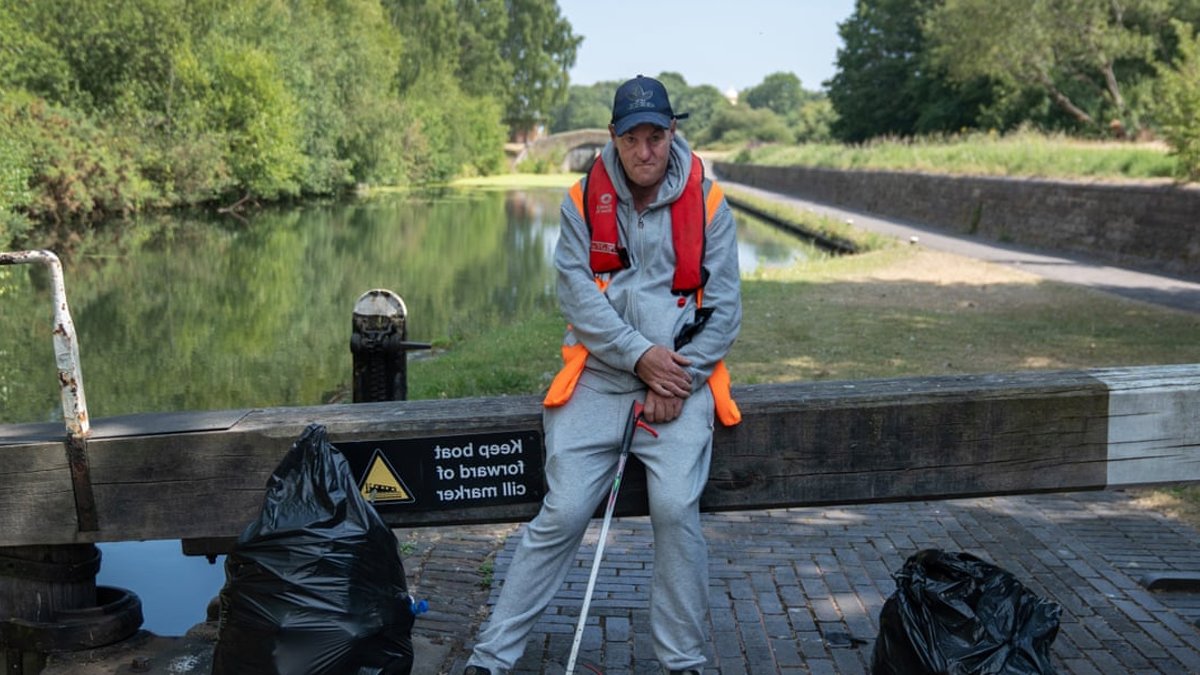
As the prison overcrowding crisis continues, an initiative in the West Midlands offers an alternative to custodial sentences, where convicted offenders work on improving waterways and green spaces.
According to the filing, this project is part of the community payback scheme, which clocked up an estimated 5m hours across England and Wales in the last year.
The project in Smethwick involves offenders working on the improvement of waterways and green spaces, including strimming and cutting back overgrown vegetation, and clearing litter from the towpath and the canal.
On a visit to the project, participants were seen working in the high temperatures.
Some were given nets to trawl the canal for rubbish and thick, green duckweed.
Steve Warmer, a 54-year-old factory worker from Dudley, was one of the participants, who said he enjoyed the work and that it gave him knowledge of life and other people.
The aim of community payback is to combine punishment with rehabilitation, and Warmer added that he and his wife now litter pick in their own street.
Courts can order between 40 and 300 hours of community payback, to be completed within a specific timeframe, and offenders must work up to 28 hours each week.
Related: Burnham intervenes over early release of grooming gang perpetrators
Failure to comply without reasonable excuse can result in enforcement action and a return to court.
The supervisor at the Smethwick project, Mo Ghafoor, said that working with the offenders was 100% more fulfilling than his previous job as a corporate banker.
Other forms of community payback include removing graffiti, decorating public places and buildings, and planting trees, and anyone can nominate a project for the scheme through a guidance process.
Community payback is not suitable for everyone but covers a wide range of adult offending and can be included as part of suspended sentences.
Critics might see community payback as a soft sentencing option, but Ghafoor said that it gives individuals a structure to their life, breaks a negative cycle, and changes their mindset, bringing reoffending down.
The Sentencing Act, which received royal assent in January, introduces a presumption for courts to suspend short custodial sentences of 12 months, which will mean more offenders carrying out community-based punishments.
It will be interesting to see how the introduction of a presumption for courts to suspend short custodial sentences affects the overall reoffending rates in the future.
The Smethwick project is just one example of how community payback can work in practice, and it’s a reminder that there are alternative solutions to prison sentences that can benefit both the offenders and the community.


