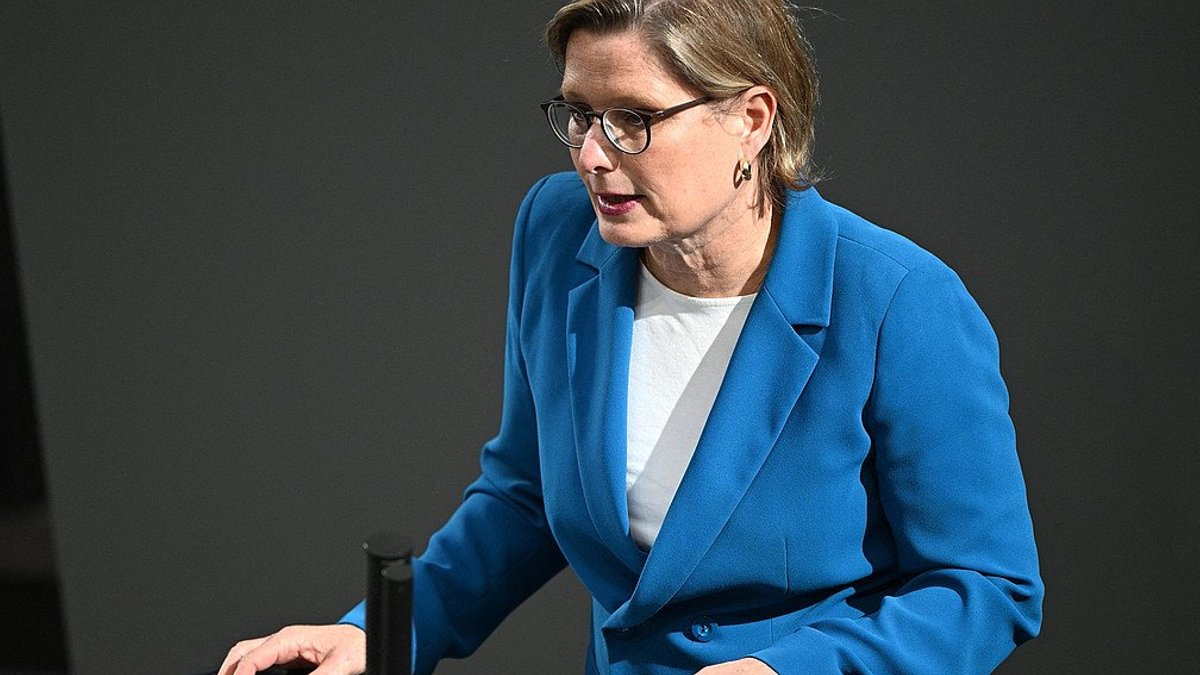
A new draft law from Germany’s Federal Ministry of Justice and Consumer Protection (BMJV) proposes criminalizing verbal and nonverbal sexual harassment, while leaving a stricter “only yes means yes” consent rule out of the Criminal Code—for now.
The proposal, presented by Justice Minister Stefanie Hubig (SPD) on Monday, introduces a new offense under §184i Abs. 2 StGB for acts like catcalling, lewd comments, or sexually charged gestures that intimidate or coerce. Offenders could face up to a year in prison or a fine, though prosecution would require either the victim’s complaint or proof of public interest.
Hubig framed the move as a direct response to a long-standing gap in German law. Currently, §184i StGB only covers physical harassment, leaving verbal or gestural abuse unpunishable unless it qualifies as defamation (§185 StGB). The BMJV cited a 2017 Bundesgerichtshof (BGH) ruling in which a court dismissed a case against a man who told an 11-year-old girl he wanted to “touch her vagina”—because his words alone weren’t considered criminal.
The new law also extends the statute of limitations for group sexual assaults to 20 years, aligning with existing rules for cases involving weapons or extreme violence. Under current law, some rape cases verged on expiration after just five years, even when victims were unconscious or traumatized. A recent case in Hamburg, where a man allegedly raped his wife dozens of times while she was asleep, highlighted the problem. Many charges were dropped due to time limits, despite the victim’s testimony and the defendant’s recorded evidence.
Tougher Sentences Proposed
For group rapes, the draft raises minimum sentences from two years to five years in prison. If the assault results in pregnancy, the penalty jumps to the same five-year minimum. Individual offenders in group attacks now face at least three years, up from two.
The BMJV explicitly avoids the term “catcalling” in its draft, arguing the word trivializes harassment by downplaying its psychological impact. Instead, it refers to “sexually determined expressions or gestures” that create a hostile environment.
Hubig’s proposal stops short of adopting a “only yes means yes” standard, despite calls from the Bundesrat and CDU/CSU lawmakers. The current “no means no” rule (§177 Abs. 1 StGB, introduced in 2016) requires prosecutors to prove the victim’s lack of consent was recognizable to the perpetrator.
While Hubig has signaled openness to a “yes means yes” reform in interviews, she emphasized that further discussions are needed within the coalition. The draft now goes to federal states and advocacy groups for feedback by November 30, 2026. Pressure to align with neighboring countries, where Sweden, Spain, and Denmark have already implemented stricter consent laws, may yet reshape the final bill.
International Obligations Drive Change
The BMJV’s reasoning for the new harassment law rests partly on international obligations. Germany ratified the Council of Europe’s Istanbul Convention, which requires criminalizing all forms of unwanted sexual advances. Article 40 of the treaty explicitly demands penalties for verbal, nonverbal, and physical harassment.
The draft’s structure as a relative prosecution offense reflects practical concerns. Victims can still pursue cases privately if prosecutors decline to act, but the bar for public interest remains high.
The BMJV’s decision to phase in changes incrementally reflects internal debates. Earlier this year, Axel Müller, a CDU legal policy spokesman, argued that the current law’s reliance on “recognizable resistance” leaves gaps in cases of drug-facilitated assaults or sleep-related abuse. Yet Hubig’s office insists the draft strikes a balance between legal certainty and victim protection.
Closing Loopholes in Harassment Law
One unresolved issue is whether the new harassment law will overlap with existing defamation charges. The BMJV acknowledges that some lewd comments might already fall under §185 StGB, but the draft aims to close loopholes where courts dismiss cases for lacking “serious insult.” The 2017 BGH ruling remains a key precedent the ministry wants to overturn.
The draft’s publication triggers a 12-month consultation period, during which legal scholars, women’s rights groups, and prosecutors will scrutinize its wording. Amendments are likely, particularly on the “only yes means yes” debate. For now, Hubig’s office has framed the proposal as a first step, -one that criminalizes harassment without upending the entire sexual offense framework.


