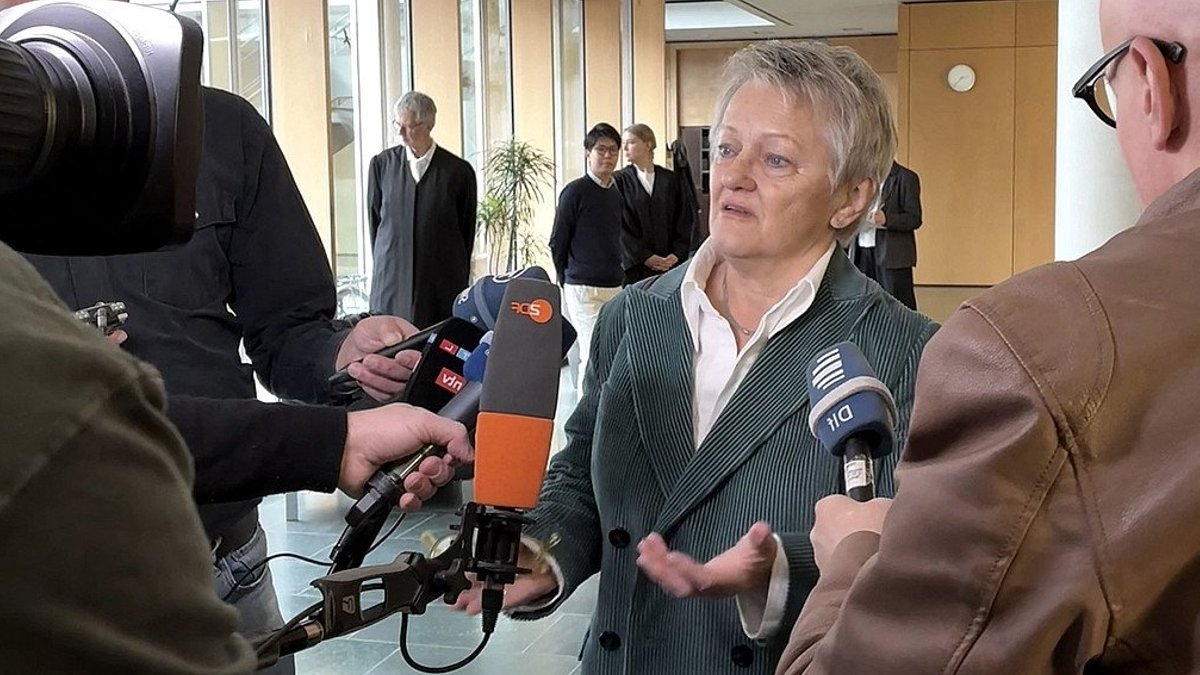
A German court has referred a landmark case against Meta to the European Court of Justice (ECJ) after four years of legal proceedings, leaving open whether social media platforms must proactively remove identical false content once notified. The Federal Court of Justice (BGH) made the referral on October 27, 2026, in the dispute involving Renate Künast, a former Green Party leader in Germany.
The core issue revolves around a widely circulated meme falsely quoting Künast as saying, “Integration fängt damit an, dass sie als Deutscher mal Türkisch lernen” (“Integration starts with them as Germans learning Turkish”). Since Künast never made the statement, she sought court orders requiring Meta to delete all semantically identical versions of the meme without her having to identify each post individually.
Lower courts in Frankfurt had previously ruled in Künast’s favor, but the BGH now seeks ECJ clarification on whether EU law, specifically the Digital Services Act (DSA), the e-commerce directive, and the GDPR, applies to such cases. The court is asking whether social media platforms qualify as “hosting services” under the DSA and whether they must remove repeated false claims once notified. Meta has consistently argued that identifying and removing identical false content requires manual review of each post’s context, a process the company claims exceeds its legal obligations as a hosting provider.
The referral follows an earlier ECJ ruling in Case C-492/23 (Russmedia), which established that hosting services can be held liable for illegal content even without prior knowledge. However, that decision pertained to online marketplaces, not social media, leaving uncertainty about Meta’s obligations. The case now hinges on whether EU law requires platforms to adopt a “notice-and-delete-all” system for repeated false claims, rather than the current “notice-and-take-down” approach. Dr. Maximilian Wagner, a lawyer involved in similar cases, has stated that unclear liability rules could lead to “collateral damage for freedom of expression.”
Künast’s legal team argues that platforms like Meta should bear responsibility for policing repeated falsehoods, given their global reach. “You can’t expect a private individual to hire 30 people to hunt down identical posts worldwide; that’s the platform’s job,” Künast said during earlier hearings. Her case is supported by HateAid, a nonprofit focused on combating hate speech online. Josephine Ballon, HateAid’s executive director, described the BGH’s referral as a sign that courts recognize the need for clearer rules on platform accountability.