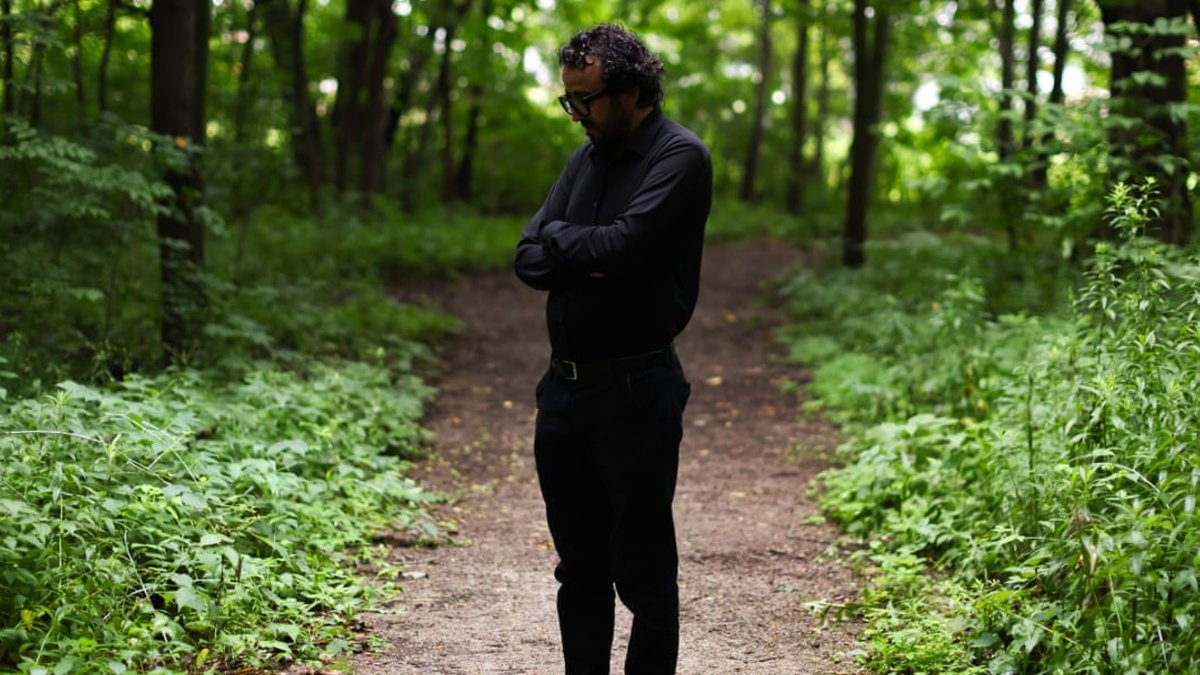
Gabar Choli, a 40-year-old Kurdish film-maker and asylum seeker, spent nearly eight months in a Texas immigration detention center being force-fed by guards after he went on hunger strike to protest conditions and demand release. His account describes a routine of restraint, pain, and what medical experts call torture.
In June 2025, a sluggish and thin Choli, with sunken temples and bones visible under his skin, braced himself for the immigration detention center guards to charge into his cell once again. Choli was in a solitary confinement medical cell inside the Port Isabel service processing center, an Immigration and Customs Enforcement (ICE) detention facility in south Texas where immigrants arrested in Donald Trump’s anti-immigration crackdown are detained.
“Two guards would hold my feet; two hold my hands; one hold my head—and they would shove tubes in my nose,” Choli said. “It’s not easy to be wrestled to the ground twice a day by men that are stronger than you. And you just take it. You have 60cm of tube going through you and you just feel every centimeter of it.”
Choli, who had been on hunger strike for over two months, demanding improved conditions for detained immigrants and to be released or deported, said his nose was swollen, his throat hurt and he could still taste blood from previous days of treatment for which he never gave his consent.
Related: Blunders allowed killer to strike again
An investigation by the Guardian, based on dozens of pages of court records and interviews with medical and legal experts, found that Choli was quietly and intermittently force-fed by ICE for nearly eight months—from late May 2025 until he was deported in January.
He suffered swollen sinuses, a damaged esophagus, stomach problems and psychological torment, according to court records and his own account. “It just broke me, mentally broke me,” Choli said. After sometimes twice-daily sessions “they would take me to [a] solitary cell and I would just choke on my blood and drink the blood from inside [my throat],” he said, describing how the feeding tube would scrape him inside.
ICE sought court orders for involuntary medical procedures
An investigation found that since January 2025, the Trump administration used court orders in plans to subject at least 10 hunger strikers in ICE detention to involuntary medical procedures, including force-feeding. The administration has not officially acknowledged force-feeding anyone in immigration jails.
Choli was not alone—he even met a fellow hunger striker, an Afghan man, as they were both forcibly fed in the same ICE facility. Force-feeding is an excruciating and traumatizing process that has been widely condemned by human rights organizations as torture. For Choli and others, refusing food is a last resort to protest against harsh conditions and lack of progress in their immigration cases, but sometimes brings only harsher conditions.
Related: Supreme Court: Threshold Questions Reshape Regulatory Litigation
“I understood the necessity of making a stand for what was right,” Choli said, speaking by phone with the Guardian from Canada. “I was respectful. I just told them I am protesting for humane treatment, nothing else. But they were determined to break me.”
Many of his court records remain sealed and he did not have a lawyer—and medical staff there did not respond to the Guardian’s reporting—so some details in Choli’s account remain uncorroborated.
Human rights groups condemn force-feeding as a violation of medical ethics. The World Medical Association states that hunger strikers of sound mind have the right to refuse treatment.
ICE argued in court that Choli’s protest threatened “the security and good order” of the facility. The filings suggest an effort to suppress such demonstrations, even as officials publicly deny their frequency.
Related: Domestic abusers released early gamble with women’s lives
A fragile recovery after deportation
Choli was deported in January, where he spoke to the Guardian from Canada. His first solid meal—a small salad—left his jaw aching for days.
“It may sound strange, but I had to learn how to eat again,” he said.
Months later, he still feels pain when he moves, a lingering effect of the procedures. “The price was my health,” he said. “My kidneys, my gallbladder. My intestines. My being.” He blames a system that treats immigrants as disposable. “The system is responsible.”
ICE and the U.S. Attorney’s Office moved to dismiss his case after his deportation. The court’s dismissal notice, sent to the Port Isabel detention center, was returned unopened. The envelope bore two words: “Return to sender. Not here.”


