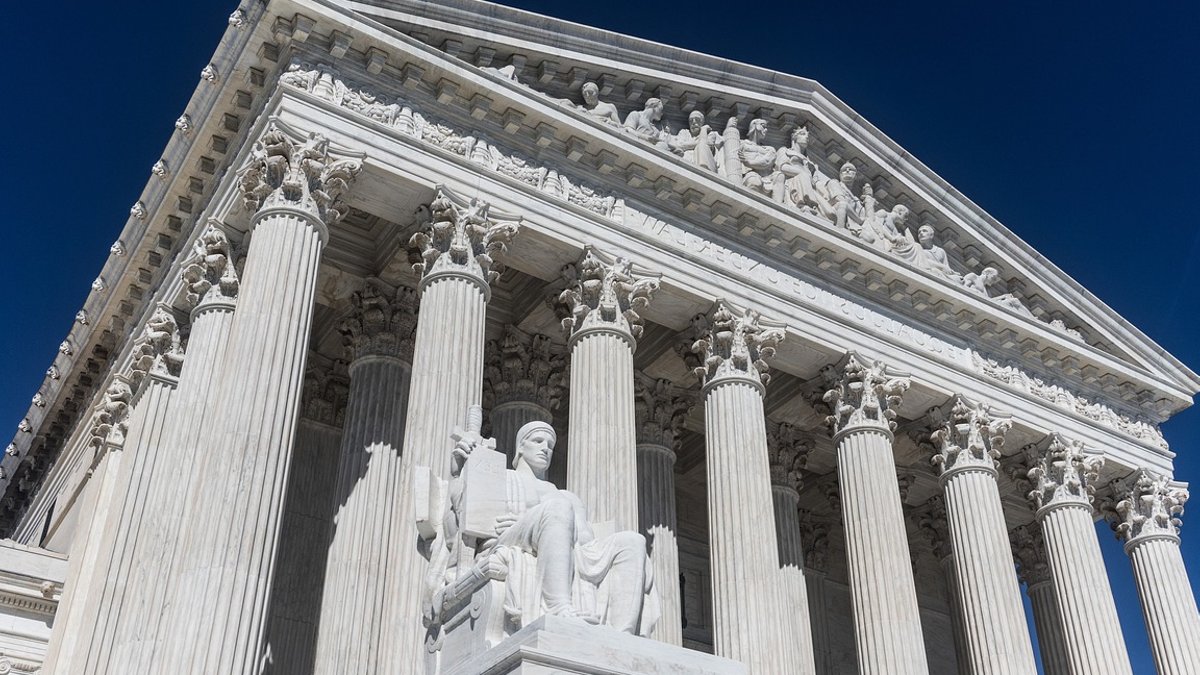
The U.S. Supreme Court will hear oral arguments on May 15 about the Trump administration’s effort to overturn birthright citizenship, a right guaranteed by the Fourteenth Amendment for more than a century.
Legal backdrop of citizenship by birth.
Birthright citizenship rests on Section 1 of the Fourteenth Amendment, which declares that “all persons born or naturalized in the United States, and subject to the jurisdiction thereof, are citizens of the United States.” Adopted in 1868, the amendment was meant to counter the Supreme Court’s 1857 decision in Dred Scott v. Sandford, which denied citizenship to Black people.
The principle was reaffirmed in 1898 by the Court’s ruling in United States v. Wong Kim Ark, confirming that a child born in San Francisco to Chinese parents was a citizen. Since then, the rule has applied to virtually every child born on American soil, regardless of parental status.
Trump’s executive order and the ensuing lawsuits.
Shortly after his January 2025 inauguration, President Trump issued an executive order that would stop automatic citizenship for children whose parents are in the country illegally or on temporary visas. The order directly challenges the long‑standing interpretation of the Fourteenth Amendment and the precedent set by Wong Kim Ark. Within days, multiple district courts issued nationwide injunctions blocking the order. Judges John Coughenour, Deborah Boardman, and Leo Sorokin each halted enforcement.
Related: New York Bill to Track AI Job Layoffs
Arguments before the high court.
Opponents maintain that the amendment’s text and the precedent of Wong Kim Ark establish birthright citizenship for nearly all children born in the United States. They argue that the administration’s emergency justification is thin, and that the surge of injunctions reflects the unprecedented pace of Trump’s executive orders.
Legal scholars note that the case raises deep questions about the balance of power between the executive branch and the judiciary, as well as the durability of constitutional interpretations that have survived for more than a century.
Potential impact of a decision.
If the Court sides with the administration, it would mark a dramatic shift in constitutional law, potentially altering the status of millions of future children born to non‑citizen parents. Such a change could create a tiered citizenship system, where a child’s rights depend on parental immigration status, and might even produce stateless children if their parents’ home countries do not grant citizenship by descent.
Supporters say the order corrects a misreading of the amendment’s original purpose and would reduce incentives for illegal immigration, a core concern of the Trump administration.
Critics warn that overturning the established rule could unravel the nation’s longstanding notion of citizenship and provoke complex legal challenges for families and immigration officials alike.
Related: Customs Fraud Liability Extends Beyond Importers
From a practical standpoint, families living in mixed‑status households could face new hurdles in school enrollment, healthcare access, and employment for their children. The shift would likely ripple through state and local services that currently assume birthright citizenship as a given.
Next steps and timeline.
The Supreme Court has allotted one hour for oral arguments, though the complexity of the case suggests the session may run longer. A decision is anticipated by late June or early July 2025. The 6‑3 conservative majority has previously expressed skepticism toward sweeping injunctions, but the Court has left those orders in place until it issues a ruling.
They await the ruling.
Regardless of the outcome, the hearing represents one of the most consequential challenges to established constitutional interpretation in decades, with far‑reaching implications for the meaning of American citizenship.


