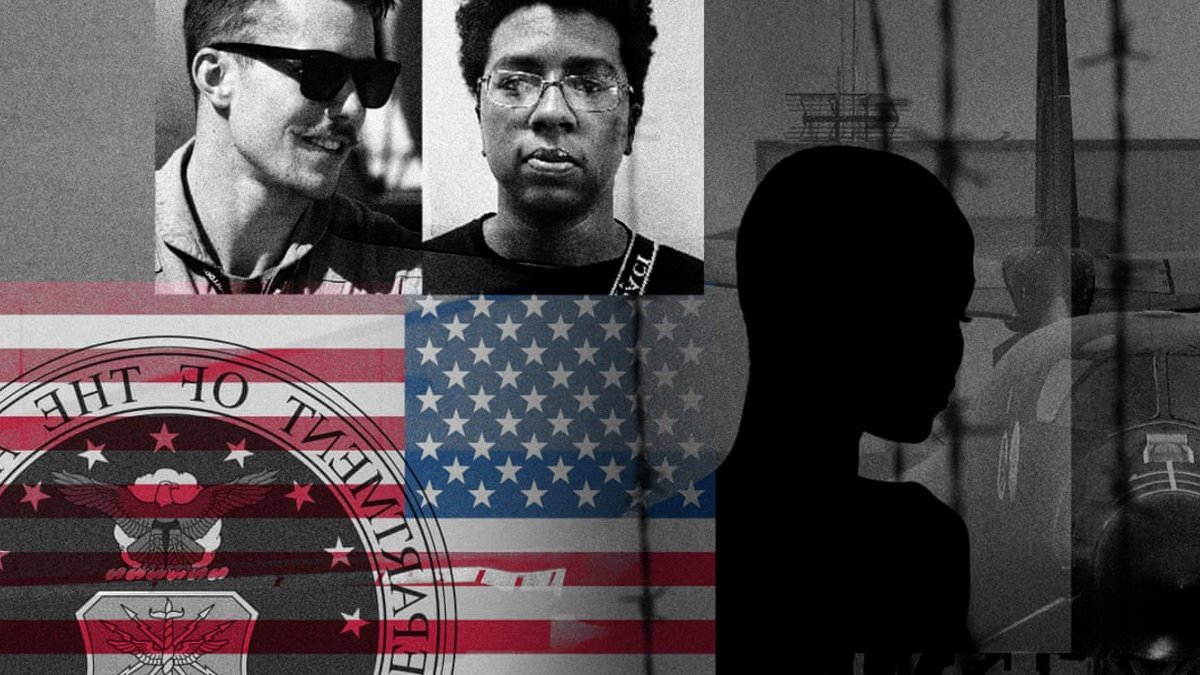
The UK’s special relationship with the United States has allowed American servicemen accused of sexual assault in Britain to avoid the British justice system, according to a recent Guardian investigation. The report details how military personnel have been tried by their peers in US courts martial, often resulting in lesser sentences than would likely be imposed under British law.
RAF Lakenheath in Suffolk operates as a closed community with its own legal frameworks. Visitors find a miniature Statue of Liberty and a Taco Bell drive-thru, creating an environment distinct from the surrounding countryside. This separation allows for a legal system that differs significantly from British standards.
Journalists Harry Davies and Rob Evans gained rare access to a court martial in April, observing the trial of Jacob Wulfson, a fighter pilot accused of raping a British academic. The courtroom atmosphere felt entirely foreign, with a US defense lawyer aggressively discrediting the victim and the all-male jury considering the defendant’s combat record in Afghanistan as a mitigating factor for his sentence.
Wulfson was convicted of strangling an intimate partner and dismissed from the air force, but he avoided conviction for drugging or rape. Under British law, he likely would have faced a rape charge, and the maximum sentence for strangling an intimate partner in a UK court can be life imprisonment. The investigation uncovered similar cases involving other US service members who were not convicted of rape despite allegations of sexual assault and exposure.
Questions of jurisdiction
US forces in Britain are governed by the 1951 agreement that gives the US government jurisdiction over personnel accused of crimes against other service members or while on duty. For other offenses, British police are supposed to have the first call on prosecution. However, documents show that US military authorities have been aggressively seeking to expand this jurisdiction.
Related: US military classifies UK rape cases as assault
One alleged rape victim reported receiving advice from an Independent Sexual Violence Advisor (ISVA) that the Crown Prosecution Service might not prosecute, and that the American military could provide a faster resolution. With the average wait for a rape case in England and Wales exceeding 400 days, the prospect of a military trial can appear more appealing to victims, even if the legal standards differ.
The patchwork of interpretations regarding jurisdiction among different constabularies has allowed US military courts to handle cases that might otherwise proceed through the English Crown courts. This arrangement has raised questions about whether the local population feels safe given the potential for repeated offenses by visiting service members who may face minimal consequences before moving on.
Victims often find themselves handling a complex web of options. Some victims are told that US courts provide a quicker resolution than the civilian justice system. The system effectively places the burden on the accuser to choose between a local process that drags on and a foreign process that may lack the protections they expect. This leaves many feeling trapped between two inadequate choices.
This disparity highlights the difficulties inherent in the current arrangement. The legal standards applied in these tribunals do not align with those used by the host nation. Consequently, cases involving British citizens sometimes proceed in systems that do not prioritize their rights. The reliance on a 1951 agreement to govern these matters creates a gap in accountability that persists despite modern legal expectations.


